May 29, 2026
First Results from the BUL-STOP Study Presented at EASL 2026
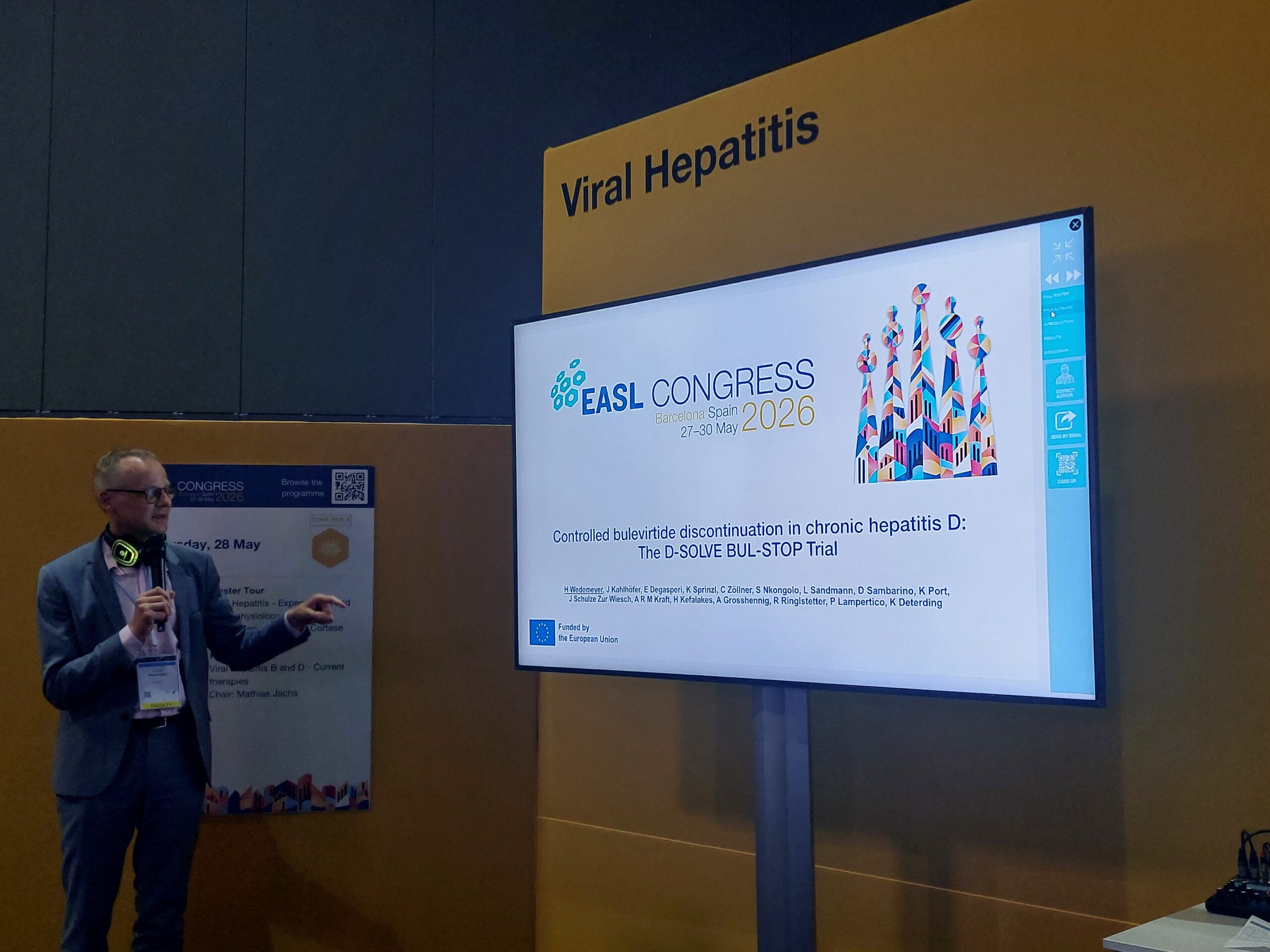
The first results of the BUL-STOP study have been successfully presented to the international scientific community at the EASL Congress 2026, held from 27–30 May 2026 in Barcelona, Spain. The findings were presented in a poster presentation session, marking the first clinical insights emerging from this important EU-funded project.
Presented by the project coordinator, Prof. Heiner Wedemeyer, these initial findings represent an important step toward understanding how bulevirtide therapy can be safely and effectively discontinued in patients with chronic hepatitis D—addressing a key challenge in long-term disease management.
The presentation of these first BUL-STOP results at EASL underscores both the clinical relevance of the study and the growing attention to hepatitis D within the hepatology community. This was further reflected by Prof. Wedemeyer’s state-of-the-art lecture on the diagnosis and treatment of viral hepatitis, highlighting the increasing importance of the field.
The rising visibility of hepatitis D at EASL 2026 is closely linked to the efforts of the D-SOLVE consortium, which has played a major role in bringing the topic into sharper scientific and clinical focus. The strong presence of the consortium was further recognized by a poster award granted to a D-SOLVE member.
Overall, the presentation of these first BUL-STOP results represents a key milestone for the project. Further analyses are ongoing, and additional data are expected to follow.
May 29, 2026
First Results from the BUL-STOP Study Presented at EASL 2026
The first results of the BUL-STOP study have been successfully presented to the international scientific community at the EASL Congress 2026, held from 27–30 May 2026 in Barcelona, Spain. The findings were presented in a poster presentation session, marking the first clinical insights emerging from this important EU-funded project.
Presented by the project coordinator, Prof. Heiner Wedemeyer, these initial findings represent an important step toward understanding how bulevirtide therapy can be safely and effectively discontinued in patients with chronic hepatitis D—addressing a key challenge in long-term disease management.
The presentation of these first BUL-STOP results at EASL underscores both the clinical relevance of the study and the growing attention to hepatitis D within the hepatology community. This was further reflected by Prof. Wedemeyer’s state-of-the-art lecture on the diagnosis and treatment of viral hepatitis, highlighting the increasing importance of the field.
The rising visibility of hepatitis D at EASL 2026 is closely linked to the efforts of the D-SOLVE consortium, which has played a major role in bringing the topic into sharper scientific and clinical focus. The strong presence of the consortium was further recognized by a poster award granted to a D-SOLVE member.
Overall, the presentation of these first BUL-STOP results represents a key milestone for the project. Further analyses are ongoing, and additional data are expected to follow.
May 29, 2026
First Results from the BUL-STOP Study Presented at EASL 2026
The first results of the BUL-STOP study have been successfully presented to the international scientific community at the EASL Congress 2026, held from 27–30 May 2026 in Barcelona, Spain. The findings were presented in a poster presentation session, marking the first clinical insights emerging from this important EU-funded project.
Presented by the project coordinator, Prof. Heiner Wedemeyer, these initial findings represent an important step toward understanding how bulevirtide therapy can be safely and effectively discontinued in patients with chronic hepatitis D—addressing a key challenge in long-term disease management.
The presentation of these first BUL-STOP results at EASL underscores both the clinical relevance of the study and the growing attention to hepatitis D within the hepatology community. This was further reflected by Prof. Wedemeyer’s state-of-the-art lecture on the diagnosis and treatment of viral hepatitis, highlighting the increasing importance of the field.
The rising visibility of hepatitis D at EASL 2026 is closely linked to the efforts of the D-SOLVE consortium, which has played a major role in bringing the topic into sharper scientific and clinical focus. The strong presence of the consortium was further recognized by a poster award granted to a D-SOLVE member.
Overall, the presentation of these first BUL-STOP results represents a key milestone for the project. Further analyses are ongoing, and additional data are expected to follow.