June 25, 2026
Landmark Study from the D‑SOLVE Consortium Provides New Insights into Chronic Hepatitis Delta
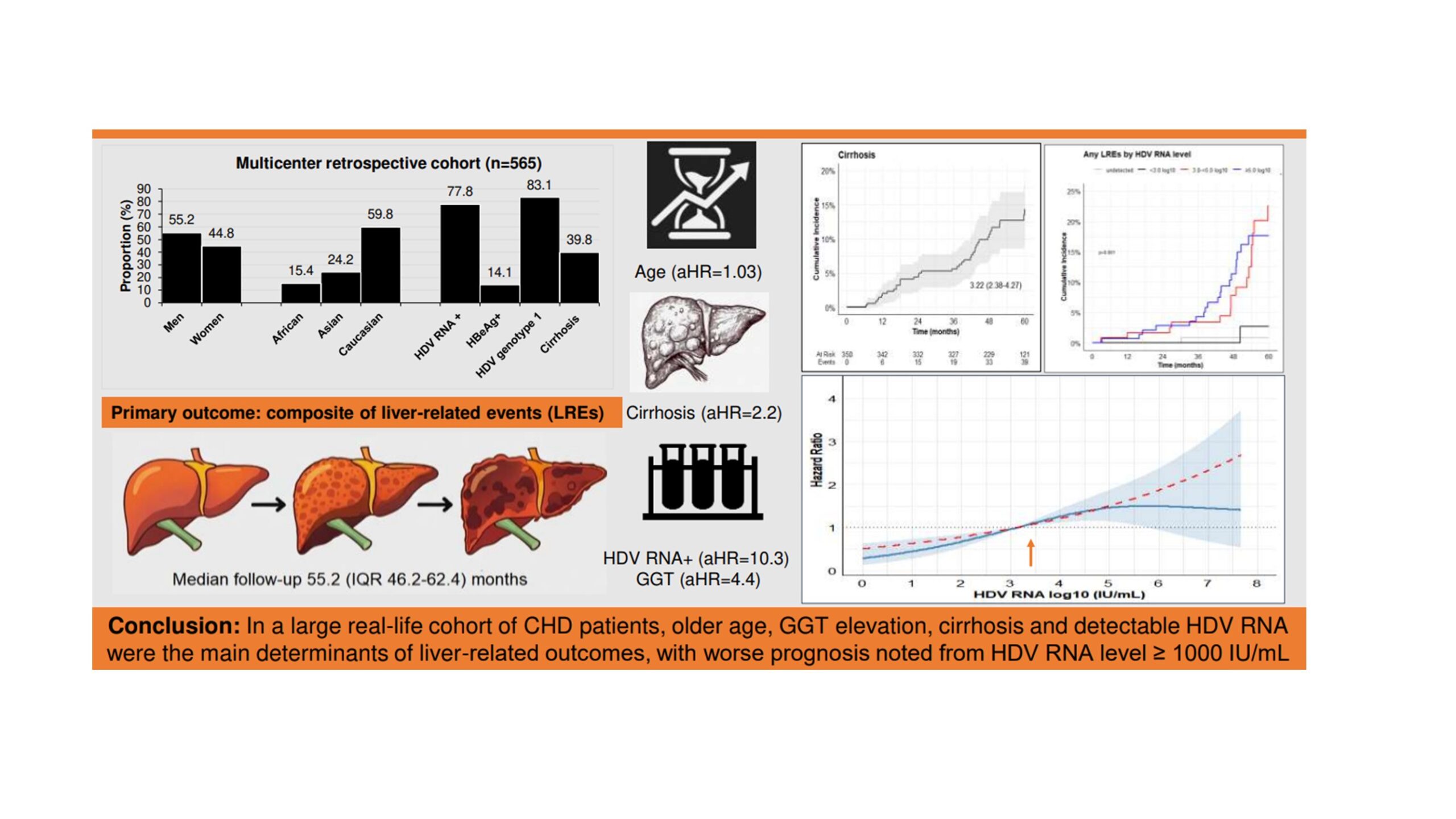
Graphical abstract from Kamal et al., Gut 2026, doi:10.1136/gutjnl-2025-336234 (CC BY‑NC)
The D-SOLVE consortium is proud to highlight the publication of a major new study:
👉 Read the full article: Full text
This study is one of the largest and most comprehensive analyses of chronic hepatitis D to date. It combines real-world data from multiple European centres and follows a large group of patients over several years, providing much-needed evidence on how the disease progresses over time.
The results show that many patients already have advanced liver disease at diagnosis, and that the disease often continues to worsen, with patients developing cirrhosis and other serious liver complications despite medical care. The study also identifies key factors that increase the risk of poor outcomes, including active hepatitis D virus (HDV) infection (ongoing viral activity), higher levels of the virus in the blood, elevated GGT (a blood test indicating liver damage), older age, and existing cirrhosis. In contrast, common markers of hepatitis B, such as HBsAg (hepatitis B surface antigen, a standard blood marker for hepatitis B infection), are less useful in predicting how the disease will develop.
These findings provide new insights into how chronic hepatitis D progresses and help to better identify patients at higher risk. This is directly relevant for clinical practice, as it supports more informed decision-making and highlights the importance of monitoring viral activity.
For the D-SOLVE consortium, this publication is an important milestone. Hepatitis D is the most severe form of chronic viral hepatitis, but long-term data have been limited. By bringing together data from multiple centres, D-SOLVE shows that it is possible to identify reliable predictors of disease progression and improve the evidence base for patient care. This work is a key step towards more personalised and effective treatment of hepatitis D.
June 25, 2026
Landmark Study from the D‑SOLVE Consortium Provides New Insights into Chronic Hepatitis Delta
Graphical abstract from Kamal et al., Gut 2026, doi:10.1136/gutjnl-2025-336234 (CC BY‑NC)
The D-SOLVE consortium is proud to highlight the publication of a major new study:
👉 Read the full article: Full text
This study is one of the largest and most comprehensive analyses of chronic hepatitis D to date. It combines real-world data from multiple European centres and follows a large group of patients over several years, providing much-needed evidence on how the disease progresses over time.
The results show that many patients already have advanced liver disease at diagnosis, and that the disease often continues to worsen, with patients developing cirrhosis and other serious liver complications despite medical care. The study also identifies key factors that increase the risk of poor outcomes, including active hepatitis D virus (HDV) infection (ongoing viral activity), higher levels of the virus in the blood, elevated GGT (a blood test indicating liver damage), older age, and existing cirrhosis. In contrast, common markers of hepatitis B, such as HBsAg (hepatitis B surface antigen, a standard blood marker for hepatitis B infection), are less useful in predicting how the disease will develop.
These findings provide new insights into how chronic hepatitis D progresses and help to better identify patients at higher risk. This is directly relevant for clinical practice, as it supports more informed decision-making and highlights the importance of monitoring viral activity.
For the D-SOLVE consortium, this publication is an important milestone. Hepatitis D is the most severe form of chronic viral hepatitis, but long-term data have been limited. By bringing together data from multiple centres, D-SOLVE shows that it is possible to identify reliable predictors of disease progression and improve the evidence base for patient care. This work is a key step towards more personalised and effective treatment of hepatitis D.
June 25, 2026
Landmark Study from the D‑SOLVE Consortium Provides New Insights into Chronic Hepatitis Delta
Graphical abstract from Kamal et al., Gut 2026, doi:10.1136/gutjnl-2025-336234 (CC BY‑NC)
The D-SOLVE consortium is proud to highlight the publication of a major new study:
👉 Read the full article: Full text
This study is one of the largest and most comprehensive analyses of chronic hepatitis D to date. It combines real-world data from multiple European centres and follows a large group of patients over several years, providing much-needed evidence on how the disease progresses over time.
The results show that many patients already have advanced liver disease at diagnosis, and that the disease often continues to worsen, with patients developing cirrhosis and other serious liver complications despite medical care. The study also identifies key factors that increase the risk of poor outcomes, including active hepatitis D virus (HDV) infection (ongoing viral activity), higher levels of the virus in the blood, elevated GGT (a blood test indicating liver damage), older age, and existing cirrhosis. In contrast, common markers of hepatitis B, such as HBsAg (hepatitis B surface antigen, a standard blood marker for hepatitis B infection), are less useful in predicting how the disease will develop.
These findings provide new insights into how chronic hepatitis D progresses and help to better identify patients at higher risk. This is directly relevant for clinical practice, as it supports more informed decision-making and highlights the importance of monitoring viral activity.
For the D-SOLVE consortium, this publication is an important milestone. Hepatitis D is the most severe form of chronic viral hepatitis, but long-term data have been limited. By bringing together data from multiple centres, D-SOLVE shows that it is possible to identify reliable predictors of disease progression and improve the evidence base for patient care. This work is a key step towards more personalised and effective treatment of hepatitis D.